For generations, many families have followed an unwritten rule: politics shouldn’t be discussed at the dinner table. And often, there’s a reason — political beliefs can be deeply emotional, and in some cases, they can tear families apart.
She couldn’t even face her husband
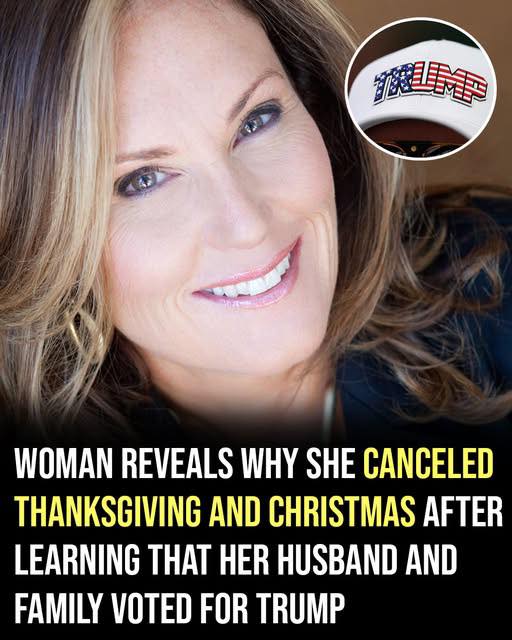
Writer Andrea Tate shared her experience in HuffPost last year, revealing how her husband’s support for Donald Trump turned the holiday season upside down.
Even before election day, each knew where the other stood — he leaned Republican, she voted Democrat.
But once Trump was officially declared the winner in November, something inside her shifted. Andrea spent hours in bed scrolling through social media, occasionally unfriending people who hadn’t supported the Democratic candidate. The emotional weight of the election overwhelmed her.
Then she spotted it: a Facebook post from her husband celebrating Trump’s victory.
“God Bless America. God bless #45, 47.”
The post had a few likes and supportive comments. Her husband was downstairs casually making coffee, while she stayed upstairs avoiding him entirely.
“I couldn’t talk to him — I couldn’t even look at him,” Andrea wrote.
Thanksgiving and Christmas… canceled
Instead of speaking to him face-to-face, she sent him a message:
“Take the post down out of respect for me and my liberal writer friends.”
And she didn’t stop there.
With the holidays approaching, she continued:
“Tell your family I love them, but I won’t be coming for Thanksgiving, and I won’t be hosting Christmas. I need space.”
Later that day, after he tried to reach out with a coffee and some comforting words, Andrea finally explained herself.
“I’m sorry about the holidays, but I cannot stay silent like I did with Hillary,” she told him. “I don’t want to disrespect your parents or your brother and his family in their home — or in ours. This is better. No drama. You can go, but I won’t sit in a room with 15 people who voted for Trump.”
To some, her reaction may seem extreme.
But Andrea described it as a moral boundary she simply could not cross.
“I will not open gifts from people who voted for a party discussing internment camps and mass deportation,” she wrote. She added that she would not “pass the turkey” to people who, in her view, supported taking away reproductive rights or harming vulnerable groups.
“I know he is a good man…”
Andrea was surprised that her husband didn’t fight her decision. Normally, skipping major holidays would have sparked an argument because he’s so close to his family.
But this time, he seemed to understand the emotional impact the election had on her. That empathy became something she clung to as she wondered what the future of their marriage would look like.
“I know he is a good man who would do anything for someone he cares about, which makes his choice even more maddening and painful,” she wrote.
Despite all the tension — and Andrea’s strong feelings — he didn’t take down the post and didn’t challenge her decisions.
She wanted to say something that would make him see things from her perspective, maybe even reconsider his stance. But she also knew that if she approached him with too much anger or pressure, it wouldn’t change anything.
“I realized I couldn’t undo what happened — only what comes next. What I choose to accept or reject, what I commit to fighting for. And I have to do it with honesty, love, and yes, anger too,” Andrea said.
Andrea’s experience isn’t just a story about canceled holidays — it reflects the deep political rifts dividing families across America.
When do personal principles outweigh tradition? Should relationships endure political disagreements, or are some divides simply too wide to overcome?