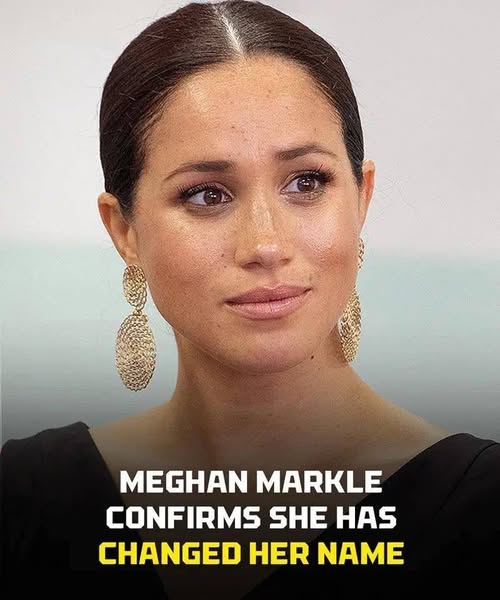
Meghan Markle has made a striking personal shift—she’s no longer using the surname Markle.
In a move that surprised many, the Duchess of Sussex has begun using “Sussex” as her last name, aligning herself with Prince Harry and their children, Archie and Lilibet.
A New Name in the Spotlight
Meghan’s new Netflix series, With Love, Meghan, has sparked conversation not only for its lifestyle content but also for reigniting debate around royal names and identity. Viewers took notice when Meghan revealed on the show that she now goes by “Sussex,” a choice that has prompted questions about royal tradition and personal branding.
The moment unfolded when Mindy Kaling referred to her as Meghan Markle. Meghan gently corrected her, saying, “It’s so funny you keep saying Markle. You know it’s Sussex now.” She went on to explain that sharing a name with her children has taken on deep emotional meaning for her.
“You have kids and suddenly you realize how important it is,” Meghan said. “It’s our family name now—our little family.”
Prince Harry and Meghan were granted the titles Duke and Duchess of Sussex by Queen Elizabeth II upon their marriage, and their children are formally known as Prince Archie and Princess Lilibet of Sussex, according to the Royal Family’s official website.
Meghan later expanded on her feelings, calling the Sussex name something that unites her family and describing it as “part of our love story.”
Public Use and Growing Attention
So far, Meghan appears to be using “Sussex” mainly in informal or media settings. She referenced it while speaking with Mindy Kaling and again during an appearance on The Drew Barrymore Show. During the March 6 episode, Barrymore introduced her as “Meghan Sussex,” marking the first time she had been publicly addressed that way on television.
Why the Change Has Sparked Debate
While Meghan remains formally styled as the Duchess of Sussex, her use of the name as a surname has drawn criticism from some royal watchers. Detractors argue that Sussex is a title linked to a geographic region rather than a family name, and that her legal surname should instead be Mountbatten-Windsor.
Some critics questioned her correction of Mindy Kaling, while others insisted that “Sussex” is not a legitimate last name. Several pointed out that Mountbatten-Windsor is traditionally used by descendants of Queen Elizabeth II who do not hold royal titles.
Meghan’s father, Thomas Markle, also weighed in, expressing sadness over her decision to move away from the Markle name. He said his late mother would have been hurt by the choice and criticized Meghan’s on-screen persona as overly polished. Meghan and her father have been estranged since before her 2018 wedding, and opinions remain divided over their fractured relationship.
Is It Really Against Royal Rules?
Despite the controversy, Meghan’s choice is not without precedent. Many members of the Royal Family have historically used their titles as surnames. Debrett’s notes that the Duke and Duchess of Sussex are entitled to use “Sussex” as a family name. Prince Harry himself previously used “Wales” as his surname during his military service, reflecting his father’s former title as Prince of Wales.
Under this tradition, Meghan and her children are well within royal custom to adopt “Sussex” as their surname.
That said, given the media’s continued use of “Meghan Markle,” including in recent high-profile features, it’s likely both names will continue to circulate.
A Name That Keeps the Conversation Going
Meghan’s decision to embrace “Sussex” has clearly struck a nerve. Supporters see it as a meaningful expression of family unity, while critics view it as unnecessary or confusing given her limited connection to the county itself.
And, of course, the Mountbatten-Windsor debate continues to add fuel to the discussion.
So—is this a natural evolution of royal tradition, or a step too far? As with most things involving the Sussexes, opinions remain sharply divided.