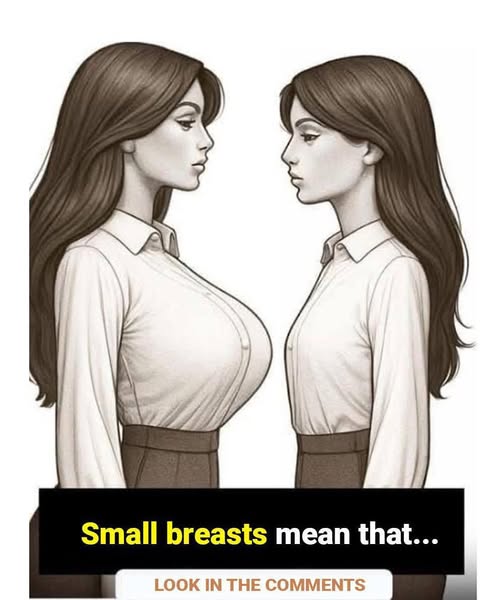
Perception, and Why Smaller Breasts Come With Unique Advantages
When conversations about body image and health arise, breast size is often at the center — surrounded by misconceptions, shifting beauty ideals, and cultural expectations. But what actually defines breast size medically? How do societal trends influence our perceptions? And do smaller breasts offer specific physical advantages?
This evidence-based report breaks down the science, health implications, and emotional aspects of breast size — separating fact from fiction.
How Breast Size Is Defined: What Counts as Small or Large?
There is no universal medical definition of what constitutes “small” or “large” breasts. However, breast size is generally categorized using bra measurements, which include:
-
Band size (the chest circumference, e.g., 80–85 cm or 32–34 inches)
-
Cup size (A, B, C, D, DD, etc.)
In broad terms:
-
Smaller breasts often fall under band sizes below 85 cm (34 in) with A–B cups
-
Larger breasts often involve band sizes above 100 cm (40 in) with D cups and beyond
However, size is always relative to body frame.
A 100 cm chest on a petite woman will appear large, while the same measurement may look proportional on someone tall or broad-shouldered.
Size is always a ratio, not a fixed number.
Beauty Trends: The Shift Toward Natural Looks
For decades, pop culture often glorified fuller busts. But in recent years, the trend has shifted dramatically toward the natural look, with increasing acceptance of:
-
Small breasts
-
Athletic body types
-
Minimal or no padding
-
Flat or nearly flat silhouettes
This shift is fueled by:
-
Fashion models
-
Social media influencers
-
The body-positivity movement
-
Celebrities embracing natural physiques
The result? Many individuals with smaller chests report greater confidence, less pressure to modify their bodies, and more recognition of the practical benefits.
Health Benefits of Having Small Breasts
Below are the evidence-supported advantages smaller breasts naturally offer:
1. Less Back, Neck, and Shoulder Pain
Large breasts can contribute to:
-
Chronic upper back pain
-
Shoulder-grooving from bra straps
-
Poor posture
-
Increased spinal curvature
A study in The Clinical Journal of Pain found that women with large breasts, especially those with macromastia, experience significantly more musculoskeletal strain.
Smaller breasts place less weight on the upper torso — reducing the risk of chronic pain.
2. Less Sagging Over Time
All breasts change with age due to:
-
Gravity
-
Loss of skin elasticity
-
Hormonal shifts
-
Weight changes
However:
Smaller breasts tend to maintain their shape longer because the tissue is lighter and does not stretch the supportive ligaments (Cooper’s ligaments) as strongly.
This often leads to:
-
Firmer appearance
-
Reduced sagging
-
Less need for surgical correction later in life
3. Easier Exercise and More Physical Comfort
Women with small breasts often report:
-
Greater comfort when jogging or jumping
-
Less breast movement during workouts
-
Fewer issues finding supportive sports bras
Studies cited by the American Council on Exercise show that excessive breast movement during physical activity can cause discomfort and even soft-tissue damage — issues far more common in those with larger breasts.
4. Greater Ease in Medical Screening
Smaller breasts may allow for:
-
More precise breast exams
-
Easier palpation of lumps
-
Clearer mammogram imaging in some cases
Important clarification:
Breast size does not affect cancer risk. Factors such as genetics, age, and hormonal exposure are far more influential.
However, larger breasts may sometimes make early detection more challenging, especially in women with very dense tissue.
Emotional and Psychological Perspectives
Historically, individuals with smaller breasts faced pressure to conform to exaggerated beauty standards. Today, that narrative is changing.
Psychological research consistently finds:
-
Self-esteem, not physical measurement, determines body satisfaction
-
Internal validation matters more than external opinions
-
Embracing one’s natural appearance correlates with improved mental health
-
Body positivity reduces anxiety, depression, and dysmorphia
In other words: Beauty is confidence — not cup size.
Common Myths About Small Breasts — Debunked
Myth 1: Small breasts can’t produce enough milk.
Fact: Milk production depends on glandular tissue, not size.
Small-breasted women can breastfeed just as effectively.
Myth 2: Larger breasts are always more attractive.
Fact: Attractiveness is subjective and varies enormously among cultures and individuals.
Myth 3: Breast size is linked to libido, fertility, or hormonal strength.
Fact: No scientific evidence supports any connection.
Why Embracing Your Natural Size Matters
Breast size is influenced by:
-
Genetics
-
Hormonal levels
-
Body composition
-
Age
-
Pregnancy and breastfeeding
Small breasts and large breasts both have their benefits and challenges. But small breasts clearly offer:
-
Greater comfort
-
Better posture
-
Easier exercise
-
Less sagging
-
Simpler medical evaluations
Most importantly:
Your worth is not measured in centimeters or cup sizes.
Conclusion: Celebrate Your Body — Because It’s Yours
Breast size is just one small aspect of a person’s anatomy, influenced by countless biological factors. As beauty standards shift and body positivity grows, small breasts are increasingly celebrated — not just aesthetically, but for their practical and health advantages.
In the end, the most meaningful measure of beauty is health, confidence, and self-acceptance.