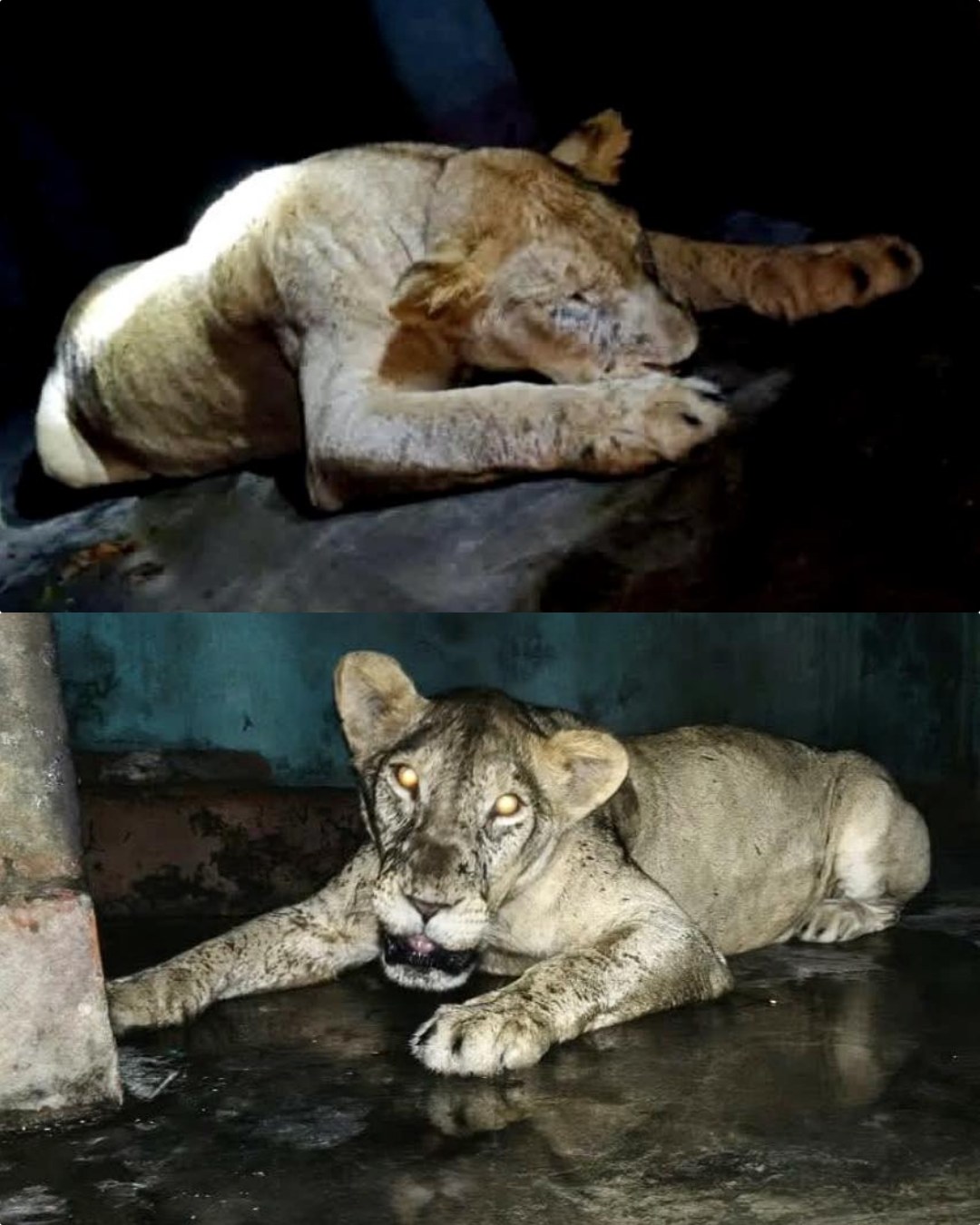
In a corner of Mirpur Zoo, a female lion named Deiji has become the face of a tragic reality. Once the majestic queen of the jungle, she now looks nothing like the powerful predator she once was. Her once-lustrous coat has faded, her bones are visible beneath her thin skin, and her eyes, once fierce and proud, now carry the weight of neglect and pain. Deiji no longer commands the awe and respect that lions typically inspire; instead, she appears weak, sick, and broken—a shadow of the magnificent creature she once was.
Deiji’s story is not unique, but it is heartbreaking nonetheless. As a wild animal kept in captivity, she was meant to be a symbol of strength and beauty, a representation of the raw power of nature. However, what was supposed to be a life of dignity and care has turned into one of suffering. In recent months, visitors to the zoo have noticed the drastic change in Deiji’s appearance and behavior. She seems to have lost her spirit, and the life that once sparkled in her eyes has been replaced by a dull emptiness.

Deiji’s plight is not just a reflection of her individual suffering, but also a painful reminder of the broader issues faced by many wild animals kept in captivity. Zoos, meant to be centers for education and conservation, can sometimes become places where animals are treated as little more than exhibits—performers in a show that disregards their basic needs and well-being. For Deiji, it’s a life that no animal should have to endure.
Her condition is one of neglect. Her once-majestic mane and powerful build have been reduced to nothing more than a frail, emaciated figure. Deiji’s ribs are visible through her fur, and her movements are slow and labored, as if every step requires an immense amount of effort. She no longer roams freely or prowls her territory like the lioness she was born to be. Instead, she lies in a cage, her life constrained by the very walls that were supposed to offer her protection. She has been deprived of the stimulation, the space, and the care that every animal deserves to live a fulfilling life.
The suffering that Deiji endures is a direct result of poor treatment. She is not the only animal in the zoo to suffer; there are many others who live in similar conditions, their spirits slowly dying as they are confined to small enclosures, deprived of food, proper care, and medical attention. Zoos that are unable to meet the needs of the animals in their care are doing more harm than good. They are not offering sanctuary, nor are they providing a space where these animals can thrive. Instead, they are offering a life of misery, one where the animals are simply existing, not living.