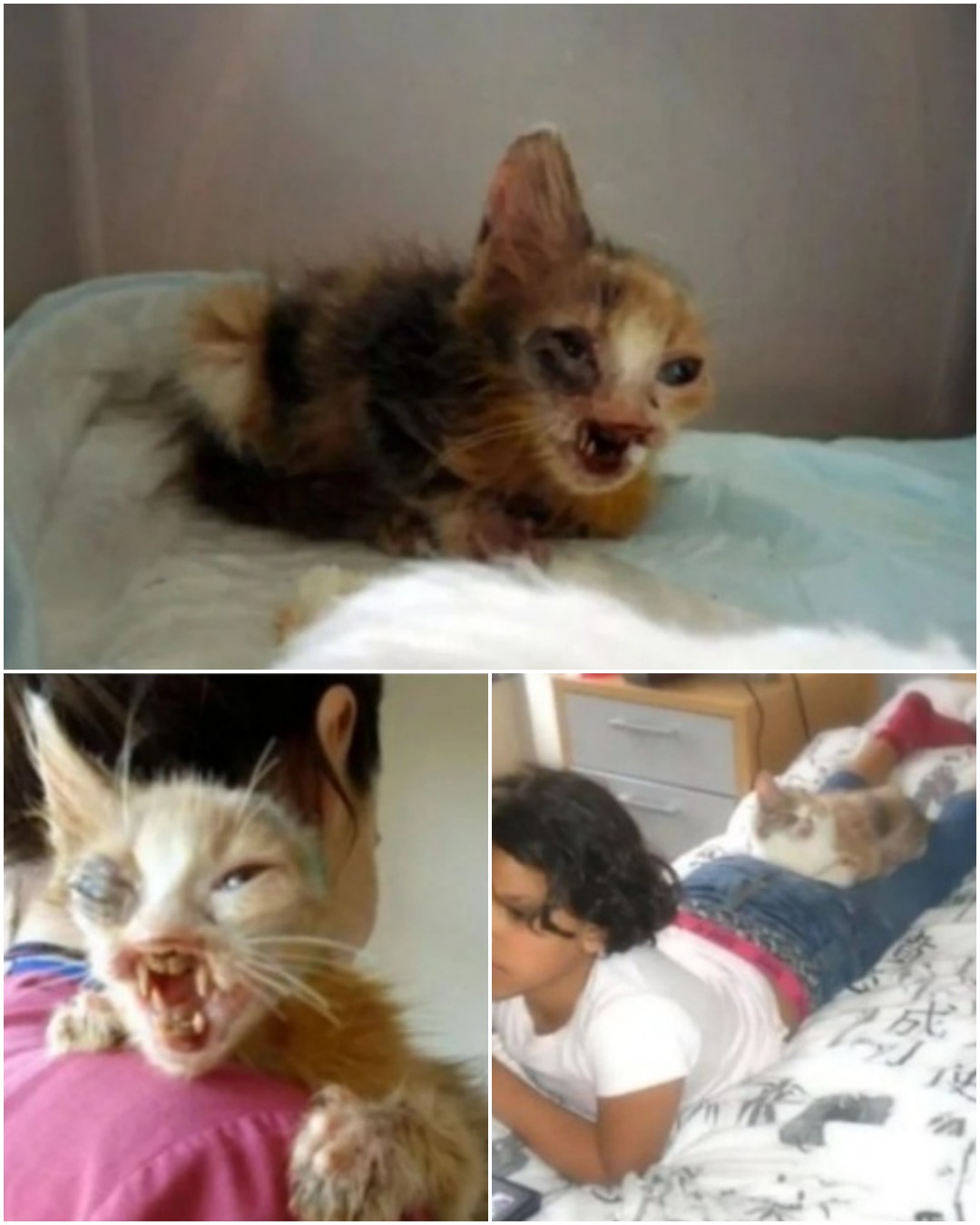
On a narrow street in Istanbul, where hurried footsteps blend with the hum of daily life, a small, broken figure once sat unnoticed. Her fur was patchy and dull, one ear was missing, one eye injured, and her fragile body bore the quiet marks of long neglect. To most passersby, she was just another stray cat—easy to overlook, easier to forget. But on that ordinary day, an extraordinary thing happened. A seven-year-old girl stopped, looked closer, and saw not damage or despair, but a life still holding on. This touching story would soon become a heartwarming story of kindness, proving that compassion does not need age, wealth, or power—only a willing heart.

The girl did not yet know the word “emaciated,” nor did she fully understand pain the way adults do. What she understood was simpler and purer: the cat looked lonely, and loneliness should never be ignored. She crouched down, her small hand extended slowly, expecting fear or rejection. Instead, the cat stayed still, as if surrendering to fate—or perhaps hoping, just once, to be seen. In that quiet moment, two lives crossed paths, setting the beginning of an inspiring story that would soon ripple far beyond a single street.
Running home, the girl tugged at her father’s sleeve, her voice trembling with urgency. She spoke of the cat’s missing ear, the wounded eye, the way her ribs showed through thin skin. The father listened, expecting a fleeting childhood impulse. But when he followed his daughter back to the street and saw the cat for himself, he understood this was not a passing wish. This was empathy in its rawest form. Without hesitation, he lifted the frail cat gently into his arms, careful not to cause pain, and together they headed toward a nearby veterinary clinic.
At the clinic, professionals confirmed what love already knew: the cat had suffered for a long time. Infection clouded her injured eye, old wounds had healed poorly, and malnutrition had weakened her body. Yet, beneath the scars, there was resilience. The veterinarian spoke calmly, explaining the treatment plan—medical care, surgery for her facial injuries, careful feeding, and time. Time to heal. Time to trust again. As the father nodded, the girl stayed close, whispering softly to the cat, as if her words alone could ease the pain.

The days that followed were slow and uncertain. The cat underwent surgery, her wounds cleaned and treated with care. Recovery was not instant, and there were moments when doubt crept in. Would she survive? Would the trauma of the streets ever leave her eyes? But each time fear surfaced, it was met with small victories: the cat eating a little more, resting a little easier, responding to gentle touches. The girl visited whenever she could, bringing drawings, stories, and a presence that felt like sunlight breaking through clouds.
It was during this time that the cat received her new name: Gulumser, meaning “she who always smiles.” The name was not chosen because life had been kind to her, but because kindness had finally found her. It was a promise rather than a description—a belief that joy could still exist after suffering. The name stuck, wrapping around her like a soft blanket, redefining her identity from forgotten stray to cherished soul.
When Gulumser finally left the clinic, she entered a home filled with patience and warmth. At first, she hid in corners, startled by sudden sounds, wary of hands reaching out. Trauma does not disappear overnight. But the family understood this. They gave her space, consistency, and gentle affection. Slowly, Gulumser began to change. Her fur grew thicker and cleaner, her movements steadier. She started seeking out the girl, curling beside her during quiet moments, their bond deepening without words.
The girl, too, was changing. She learned responsibility, tenderness, and the quiet strength it takes to care for another being. Each small improvement in Gulumser’s health felt like a shared victory. When the cat finally purred for the first time, the sound filled the room with wonder. It was a simple vibration, yet it carried the weight of survival. This heartwarming story was no longer just about rescue—it was about mutual healing.
As weeks turned into months, Gulumser’s personality blossomed. She followed the girl from room to room, slept peacefully in sunlit spots, and greeted her family with soft, trusting eyes. The missing ear and injured eye were still there, but they no longer defined her. They became symbols of endurance rather than weakness. Visitors often paused, curious about her appearance, and the family would tell her story—not with sadness, but with pride.
What makes this inspiring story so powerful is its simplicity. There was no grand plan, no expectation of recognition. Just a child who refused to look away, and an adult who chose to listen. In a world where suffering often blends into the background, this story reminds us that attention itself can be an act of love. That seeing is the first step toward saving.

Gulumser’s journey from invisibility to belonging reflects something deeply human. Many feel overlooked, defined by their wounds rather than their worth. Her transformation whispers a gentle truth: being broken does not mean being beyond hope. Sometimes, all it takes is one person to change everything.