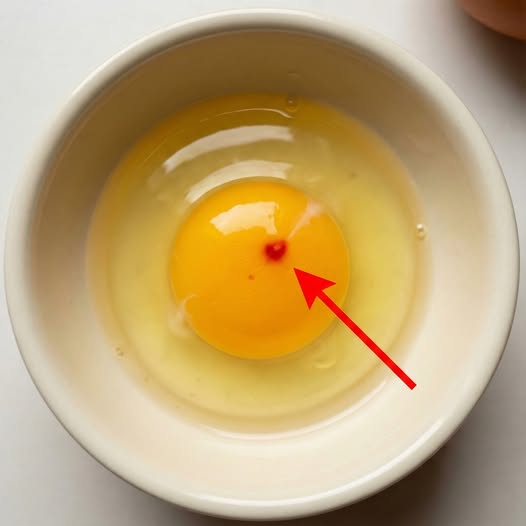
Many shoppers are caught off guard when they crack open a store-bought egg and notice tiny red or pinkish specks floating inside. These little spots can look concerning at first, but experts say they’re typically nothing to worry about. Called **blood spots**, they form naturally during the egg’s development and almost never indicate that the egg is unsafe to eat.
According to food experts, these spots appear when a small blood vessel in the hen’s reproductive tract breaks during the formation of the egg. Although modern grading and inspection systems are designed to filter out eggs with visible flaws, no process is flawless—so an occasional egg with a blood spot still ends up in the carton. Their presence isn’t a sign of spoilage or contamination.
In most situations, the egg is perfectly fine to use. Many people simply lift the spot out with the tip of a knife or spoon before cooking. The egg’s flavor, texture, and overall quality remain unchanged. That said, if an egg has an odd odor or unusual appearance **in addition to** the small spot, it’s safer to throw it away.
Producers stress that eggs with minor natural variations are still considered safe as long as they are handled, refrigerated, and stored correctly. Understanding why these spots occur can help prevent unnecessary concern—or needless waste. Though unexpected, those small reddish flecks are usually just a natural part of egg formation, not a sign of danger.